


History

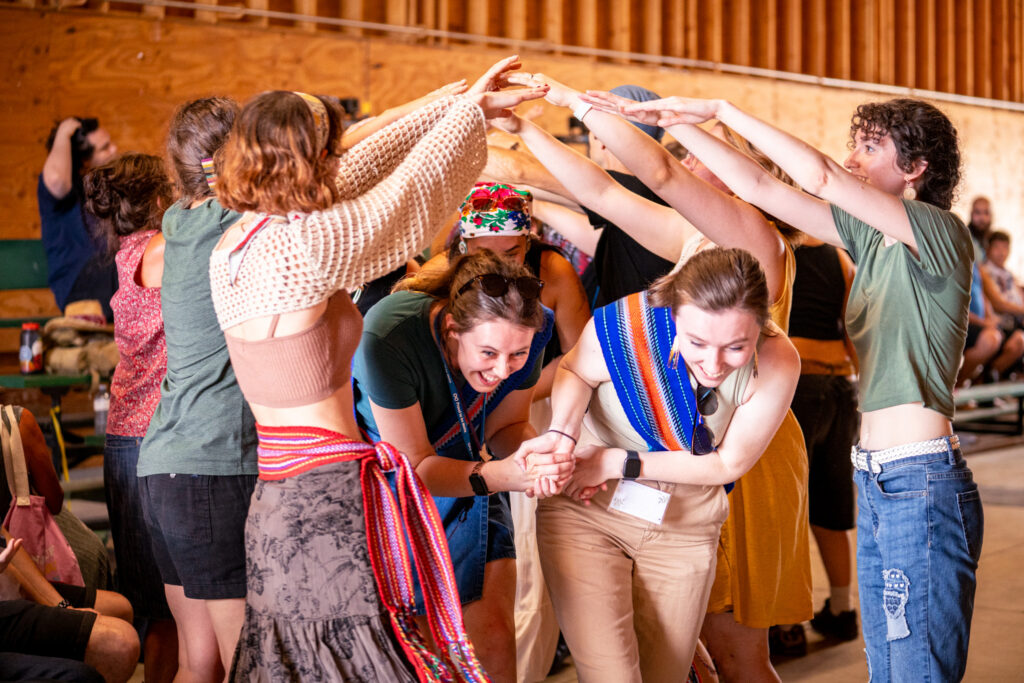
Two women walk under a tunnel of people with their arms raised for an indoor cultural activity.

Who are the Métis

Métis culture and Nationhood are rooted in intermarriages and other social connections between European and First Nations peoples during the early North American fur trade period. During the 1600s and 1700s, fur traders who came to North America from France, Scotland, England, and other parts of Europe often married First Nations women. These relationships were not only crucial for establishing trade networks, but they were also essential for survival. First Nations women possessed invaluable knowledge of the land, as well as skills in areas like food preparation, shelter-building, and navigating the natural environment—skills that European fur traders relied upon.

These marriages resulted in families and communities of mixed Indigenous ancestry. Over time, the children of these marriages grew up and often married other people of mixed heritage. Eventually, through a process called ethnogenesis, a unique Indigenous culture emerged. This is a rich and distinct culture with its own languages, traditions, governance system and artistic practices.

The term Métis does not encompass all individuals with mixed Aboriginal and European heritage. Instead, it refers to a distinct people who developed their own worldview, customs, way of life, and recognizable group identity that is separate from their First Nations or European forebears.

Métis in B.C.

Métis people have been an important part of what is now British Columbia for generations. The first documented Métis in B.C. arrived in the late 1700s. Many of them were guides for expeditions to explore the land west of the Rockies. Among them were some of the earliest recorded Métis in the region, including François Beaulieu, Jean Baptiste Boucher, Jacques Finlay, and Charlotte Small.

As the Hudson’s Bay Company and the North West Company expanded their operations, they established fur trading forts throughout the province. Métis men from across the Homeland began moving west, seeking employment with these companies. Even after the fur trade declined in the late 1800s, Métis families continued to move to B.C., where they helped to shape the province that we know today.

Métis people contributed significantly to the social, economic, and cultural life of British Columbia in the late 1800s and early 1900s. Métis traders helped establish and operate fur trading posts that were integral to B.C.’s economic development, and they supported the movement of imported goods across the province. Many Métis held prominent political positions, and they helped to shape B.C.’s government and legislature. Métis communities and individuals also contributed to the province’s cultural life by creating works of art, writing books, and participating in social organizations. 

Explore more about the history and legacy of Métis people in British Columbia by visiting the virtual version of the Amelia Douglas Institute’s exhibition: Prairies to Pacific.

Métis Culture

Métis culture is beautiful, lively, and distinct. While the culture contains influences from European and First Nations ancestry, the Métis developed a cultural identity that is uniquely our own. There are tangible and intangible customs, beliefs, visual expressions, social structures, and languages of Métis communities, the Métis way of being and doing.

Métis culture is expressed in many different ways. This includes the reciprocal nature of caretaking and kinship, the creativity and resourcefulness of Métis innovations, the expressive contemporary and heritage arts, the distinct languages developed by Métis people, the meaningful connection to the land, and the jovial love of music and dance.

For a more in-depth look at Métis culture, visit the Amelia Douglas Institute.

A man waving the blue Métis infinity sign flag outside in a parking lot.

The Métis Flag

The Métis flag is the oldest flag Indigenous to Canada, and it predates the Canadian maple leaf flag by over 150 years. The Métis flag depicts a white infinity symbol in the middle of a blue or red flag. The red Métis flag has been documented as appearing as early as 1815, and the blue Métis flag in 1816. The Métis flag symbolizes Métis identity, and flying the flag demonstrates Métis pride.

There are many explanations as to the meaning and origin of the infinity symbol. Some believe that the infinity symbolizes the joining of two cultures. Another interpretation of the infinity symbol is that it represents the strength of the Métis Nation, which will continue forever.
A man waving the blue Métis infinity sign flag outside in a parking lot.

The Métis Flag

The Métis flag is the oldest flag Indigenous to Canada, and it predates the Canadian maple leaf flag by over 150 years. The Métis flag depicts a white infinity symbol in the middle of a blue or red flag. The red Métis flag has been documented as appearing as early as 1815, and the blue Métis flag in 1816. The Métis flag symbolizes Métis identity, and flying the flag demonstrates Métis pride.

There are many explanations as to the meaning and origin of the infinity symbol. Some believe that the infinity symbolizes the joining of two cultures. Another interpretation of the infinity symbol is that it represents the strength of the Métis Nation, which will continue forever.

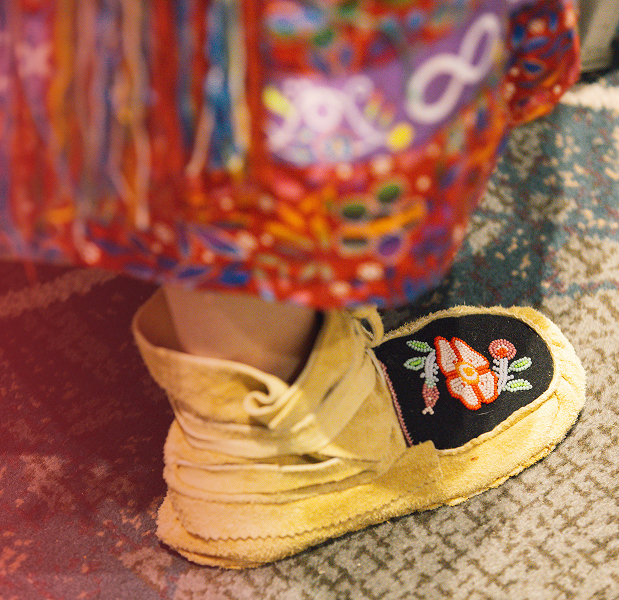
A yellow-coloured moccasin with a red- and green-coloured beaded flower on a black background and the hem of a colourful skirt.

Métis Beadwork

Métis women played an essential role in the fur trade, and they were frequently married to Hudson’s Bay Company and North West Company employees. Their close involvement with the fur trade meant they often had access to several European trade goods, including glass beads. Métis women combined the techniques of First Nations quillwork with the techniques and patterns of European embroidery to create a distinct style of floral beadwork. They used this colourful and elaborate floral beadwork to decorate moccasins, clothing, bags, accessories, and even household items. Because of this, the Métis are sometimes referred to as the ‘Flower Beadwork People.’

Today, beadwork is practiced by many Métis artists. While it is still used to decorate traditional items such as moccasins, clothing, and bags, it is also used to create modern items, like earrings or broaches. Traditional floral beadwork continues to serve as a source of inspiration for many contemporary Métis artists who practice in other mediums.
A yellow-coloured moccasin with a red- and green-coloured beaded flower on a black background and the hem of a colourful skirt.

Métis Beadwork

Métis women played an essential role in the fur trade, and they were frequently married to Hudson’s Bay Company and North West Company employees. Their close involvement with the fur trade meant they often had access to several European trade goods, including glass beads. Métis women combined the techniques of First Nations quillwork with the techniques and patterns of European embroidery to create a distinct style of floral beadwork. They used this colourful and elaborate floral beadwork to decorate moccasins, clothing, bags, accessories, and even household items. Because of this, the Métis are sometimes referred to as the ‘Flower Beadwork People.’

Today, beadwork is practiced by many Métis artists. While it is still used to decorate traditional items such as moccasins, clothing, and bags, it is also used to create modern items, like earrings or broaches. Traditional floral beadwork continues to serve as a source of inspiration for many contemporary Métis artists who practice in other mediums.

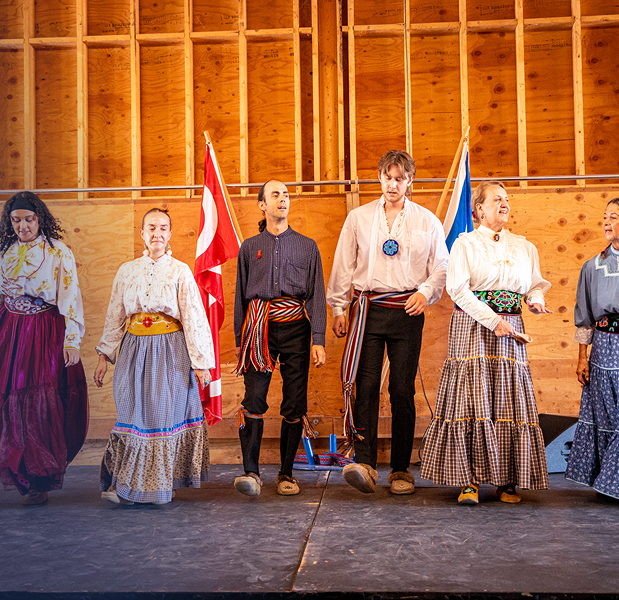
A group of men and women wearing traditional Métis clothing standing in a row.

Traditional Dress

Traditional Métis clothing combined the dress of fur traders with First Nations styles in a uniquely Métis way. The most distinct feature of Métis clothing was its ornate decoration. Even everyday items were adorned with beadwork, quillwork, buttons, shells, ribbons, feathers, embroidery, painting, and tufted hair.

Typical clothing for Métis men included pants, a button-up shirt, and a sash. Sashes could be used as a belt for pants or to keep a jacket closed. Several types of jackets were worn at different times of the year. One of the most popular was a capote—a long, hooded coat made from wool trade blankets. Capotes were carefully crafted from a single blanket, and they produced minimal material waste. Different types of buckskin jackets were also common among Métis men.

Many Métis women preferred to wear practical clothing that was suitable for life on the land. This included dark-coloured dresses and skirts made from easy to care for fabrics like calico cotton. The full, long skirts and corsets that were popular in Victorian and Edwardian settler society restricted the movement of the person wearing them. While some Métis women chose to wear European-style dresses, many preferred dresses and skirts that were ankle length, and many did not wear corsets. Shawls were popular for outerwear for women, and layers of shawls could be added for warmth during the winter.

Traditionally, men and women wore moccasins made of animal hide. Moccasins kept feet warm and dry in all kinds of weather conditions, and their practicality and versatility made them a necessity for life across North America. Styles of moccasins varied depending on location, weather, and kinship networks. Some popular styles among the Métis include pointed toe, pucker toe, dance slippers, and plains hard sole moccasins.

Although contemporary materials are often used today, traditional items like moccasins, velvet or buckskin vests, buckskin jackets, shawls, and ribbon shirts and skirts are common attire at Métis cultural gatherings. Contemporary Métis cultural dress also includes modern items that reflect Métis history and identity, such as beaded jewelry and t-shirts with Métis-themed designs.
A group of men and women wearing traditional Métis clothing standing in a row.

Traditional Dress

Traditional Métis clothing combined the dress of fur traders with First Nations styles in a uniquely Métis way. The most distinct feature of Métis clothing was its ornate decoration. Even everyday items were adorned with beadwork, quillwork, buttons, shells, ribbons, feathers, embroidery, painting, and tufted hair.

Typical clothing for Métis men included pants, a button-up shirt, and a sash. Sashes could be used as a belt for pants or to keep a jacket closed. Several types of jackets were worn at different times of the year. One of the most popular was a capote—a long, hooded coat made from wool trade blankets. Capotes were carefully crafted from a single blanket, and they produced minimal material waste. Different types of buckskin jackets were also common among Métis men.

Many Métis women preferred to wear practical clothing that was suitable for life on the land. This included dark-coloured dresses and skirts made from easy to care for fabrics like calico cotton. The full, long skirts and corsets that were popular in Victorian and Edwardian settler society restricted the movement of the person wearing them. While some Métis women chose to wear European-style dresses, many preferred dresses and skirts that were ankle length, and many did not wear corsets. Shawls were popular for outerwear for women, and layers of shawls could be added for warmth during the winter.

Traditionally, men and women wore moccasins made of animal hide. Moccasins kept feet warm and dry in all kinds of weather conditions, and their practicality and versatility made them a necessity for life across North America. Styles of moccasins varied depending on location, weather, and kinship networks. Some popular styles among the Métis include pointed toe, pucker toe, dance slippers, and plains hard sole moccasins.

Although contemporary materials are often used today, traditional items like moccasins, velvet or buckskin vests, buckskin jackets, shawls, and ribbon shirts and skirts are common attire at Métis cultural gatherings. Contemporary Métis cultural dress also includes modern items that reflect Métis history and identity, such as beaded jewelry and t-shirts with Métis-themed designs.

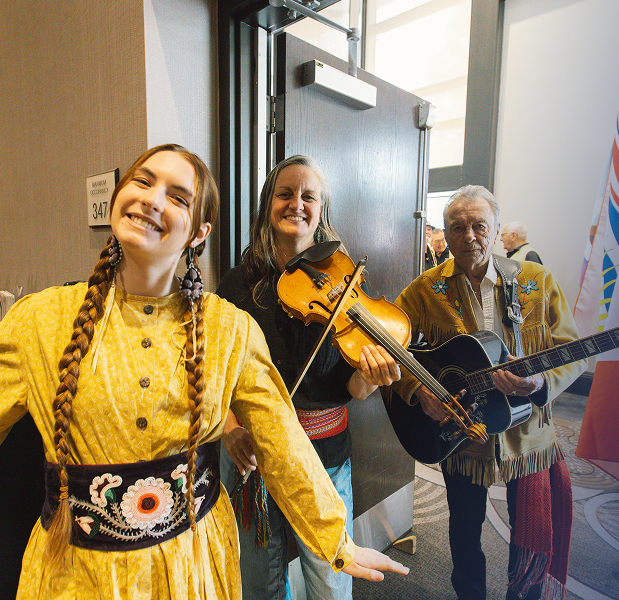
A woman is smiling and wearing traditional Métis clothing with a large black belt with a white beaded flower. Another woman is smiling, holding a fiddle, next to a man holding an acoustic guitar.

Music and Dance

Music and dance are central to Métis culture. They help to bring communities and families together, help pass on traditional knowledge and stories, and are a powerful way for Métis people to celebrate their history and identity.

Métis are best known for their distinctive fiddle music, which is usually up-tempo and accompanied by lively traditional dance like jigging. Much like the many other aspects of Métis culture, Métis music is a unique blend of influences, drawing from Irish, British, and French folk traditions, as well as the rhythmic structures of First Nations music.

Fiddles were small and lightweight, which made them easy for the semi-nomadic Métis to transport as they moved throughout their territory. Commercial fiddles were expensive during the fur trade era, so many Métis people made their own from local wood such as maple and birch.

Historically, music would have been present in many aspects of daily Métis life, and it played an essential role in the social life of communities. Informal dances were held regularly in many communities, often in homes or in communal outdoor spaces. Everyone was welcome to join in these social events, and fiddle music could sometimes be heard long into the night.

Today, music continues to be an essential part of Métis identity, and no Métis cultural gathering would feel complete without some lively fiddle music.

Fiddle music is frequently accompanied by Métis traditional dances like jigs. Métis jigging is an energetic dance style with fancy footwork influenced by Scottish highland, Celtic, and First Nations dancing. The Red River Jig is one of the most popular and well-known Métis dances.
A woman is smiling and wearing traditional Métis clothing with a large black belt with a white beaded flower. Another woman is smiling, holding a fiddle, next to a man holding an acoustic guitar.

Music and Dance

Music and dance are central to Métis culture. They help to bring communities and families together, help pass on traditional knowledge and stories, and are a powerful way for Métis people to celebrate their history and identity.

Métis are best known for their distinctive fiddle music, which is usually up-tempo and accompanied by lively traditional dance like jigging. Much like the many other aspects of Métis culture, Métis music is a unique blend of influences, drawing from Irish, British, and French folk traditions, as well as the rhythmic structures of First Nations music.

Fiddles were small and lightweight, which made them easy for the semi-nomadic Métis to transport as they moved throughout their territory. Commercial fiddles were expensive during the fur trade era, so many Métis people made their own from local wood such as maple and birch.

Historically, music would have been present in many aspects of daily Métis life, and it played an essential role in the social life of communities. Informal dances were held regularly in many communities, often in homes or in communal outdoor spaces. Everyone was welcome to join in these social events, and fiddle music could sometimes be heard long into the night.

Today, music continues to be an essential part of Métis identity, and no Métis cultural gathering would feel complete without some lively fiddle music.

Fiddle music is frequently accompanied by Métis traditional dances like jigs. Métis jigging is an energetic dance style with fancy footwork influenced by Scottish highland, Celtic, and First Nations dancing. The Red River Jig is one of the most popular and well-known Métis dances.

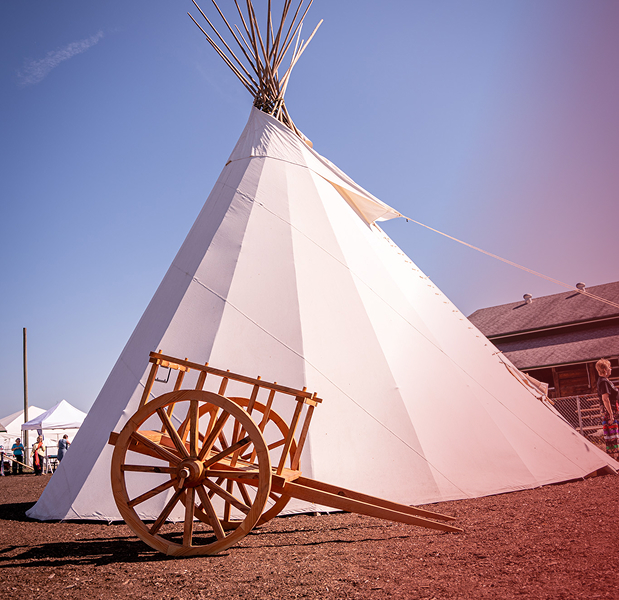
A large white Tipi with a wooden Métis wheelbarrow in front of it.

The Red River Cart

The Red River cart is an example of Métis ingenuity and adaptability. It was an essential means of transporting goods during the fur trade, and it was a crucial part of the buffalo hunts. Red River carts were made entirely from wood and leather, which made them very lightweight. This was ideal for moving through the rough terrain of the Prairies and crossing the many rivers that cut across Métis territory and trade routes. The design of the Red River Cart meant that they could be easily repaired whenever needed using locally available trees. Red River carts were also highly versatile and could be disassembled to make shelters, temporary rafts for crossing water, a sleigh in the wintertime, and other tools. Horses or oxen could haul several carts that were tied together.

Red River carts are an important part of Métis culture as well as of the history of early Manitoba. Proudly presented on various Métis flags and logos, the Red River cart represents the craftsmanship and entrepreneurial spirit of the Métis people. Red River carts can still be displayed at various museums, parks and cultural centres across the country.
A large white Tipi with a wooden Métis wheelbarrow in front of it.

The Red River Cart

The Red River cart is an example of Métis ingenuity and adaptability. It was an essential means of transporting goods during the fur trade, and it was a crucial part of the buffalo hunts. Red River carts were made entirely from wood and leather, which made them very lightweight. This was ideal for moving through the rough terrain of the Prairies and crossing the many rivers that cut across Métis territory and trade routes. The design of the Red River Cart meant that they could be easily repaired whenever needed using locally available trees. Red River carts were also highly versatile and could be disassembled to make shelters, temporary rafts for crossing water, a sleigh in the wintertime, and other tools. Horses or oxen could haul several carts that were tied together.

Red River carts are an important part of Métis culture as well as of the history of early Manitoba. Proudly presented on various Métis flags and logos, the Red River cart represents the craftsmanship and entrepreneurial spirit of the Métis people. Red River carts can still be displayed at various museums, parks and cultural centres across the country.

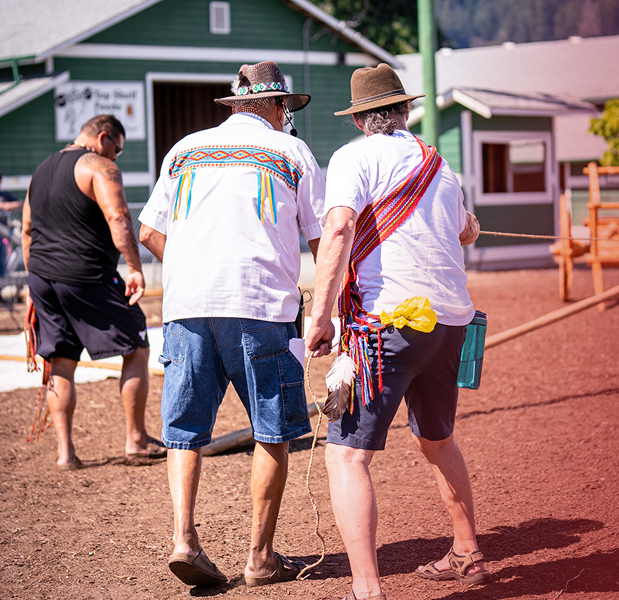
Two men are talking: the man on the left is wearing a beaded Métis shirt, and the man on the right is wearing a traditional Métis sash.

The Michif Languages

The Michif languages are unique languages that are historically linked to Métis communities across the homeland. The three Michif languages, commonly referred to as Southern (Heritage) Michif, Northern (Cree) Michif, and Michif French, are made up of elements from both First Nations (primarily Cree and Saulteaux) and European (primarily French and English) languages.

Métis people have a long tradition of multilingualism, which stems from their connections to multiple cultures and their resourcefulness and adaptability. Diverse expressions of Métis culture and different kinship networks have resulted in communities and individuals speaking a variety of other languages, such as (but not limited to) Cree, Saulteaux (Anishinabemowin/Ojibway), French, and English.

Two men are talking: the man on the left is wearing a beaded Métis shirt, and the man on the right is wearing a traditional Métis sash.

The Michif Languages

The Michif languages are unique languages that are historically linked to Métis communities across the homeland. The three Michif languages, commonly referred to as Southern (Heritage) Michif, Northern (Cree) Michif, and Michif French, are made up of elements from both First Nations (primarily Cree and Saulteaux) and European (primarily French and English) languages.

Métis people have a long tradition of multilingualism, which stems from their connections to multiple cultures and their resourcefulness and adaptability. Diverse expressions of Métis culture and different kinship networks have resulted in communities and individuals speaking a variety of other languages, such as (but not limited to) Cree, Saulteaux (Anishinabemowin/Ojibway), French, and English.